


Actually, how about the status of PFAS?
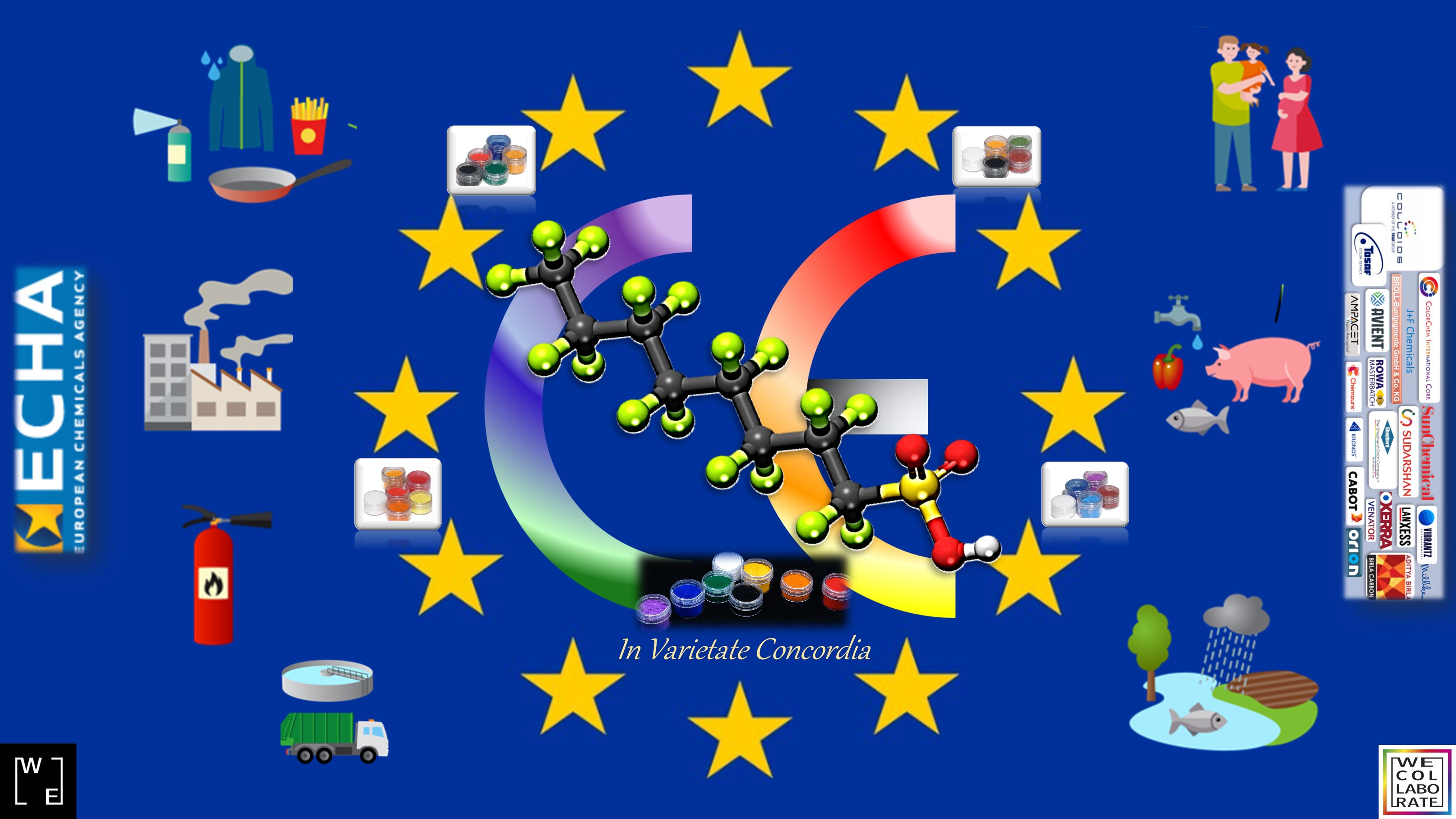
It seemed to be going so well… The Netherlands is one of the initiating countries that wants to ban PFAS completely. And that is not without reason, because the Netherlands is one of those many countries that has an enormous amount of PFAS in the soil, not least because companies like Chemours (formerly DuPont) keep granting permits for the discharge of GenX……once thought safer than PFOA. And yes, it is a shorter chain and leaves the body faster, but the health effects do seem very similar.
“Fun” fact: DuPont (!) “Water Solutions” has been selling advanced filtration technologies for years, including “reverse osmosis (RO) and ion exchange resins”, which are very effective at removing PFAS from drinking water.
Just to be complete: PFAS stands for Poly- and perFluorAlkyl Substances. They are man-made (not occurring in nature) chemical substances that are water-, grease-, and dirt-repellent. They were discovered accidentally during other experiments in 1938, and the most famous of them, Teflon, has been used in countless applications ever since. Thousands of compounds in this group have been discovered over the years, and DuPont has profited from them for decades.
It seemed like such a good idea to use them in non-stick pans, water-repellent jackets, and fire-fighting foam. It was and is so incredibly strong; what could possibly be wrong with that?
By now, we know better and experience the major negative properties of this group of PFAS. They hardly break down, if at all, are extremely mobile (because a large proportion dissolves in water!), and accumulate in the environment, drinking water, and food:
RIVM* Publication 2025:
In virtually all tested individuals (in NL), in 2025, at least seven different types of PFAS were found in their blood.
* National (Dutch) Institute for Public Health and the Environment
The RIVM suggests eating not only your own eggs (where the chickens eat many earthworms), but especially in combination with those from the store (where the chickens run on poor soil without many earthworms) … but it is not just a Dutch problem…
It occurs throughout Europe and … the rest of the world (info 2021: “It’s raining forever chemicals in Ohio”… with forever chemicals as a synonym for the PFAS compounds)!
And we now know that these compounds most likely have enormous consequences for Safety, Health, and the Environment!
And that is sometimes shocking (info RIVM):
PFOA is known to have harmful effects on the immune system and on the reproduction and development of the unborn child. It is possibly carcinogenic and harmful to nature. The substance can cause particular problems for animals at the top of the food chain, such as birds and mammals.
The precise properties differ for each specific PFAS. For example, one PFAS spreads faster or is more harmful than another. There are also many PFAS of which little is known. Therefore, it is unclear whether these PFAS have undesirable properties. We do know, however, that many PFAS break down little or not at all in the environment.
The contradictory signals from the government – ban on PFAS on the one hand, and keep granting a permit for the discharge (!) of GenX by Chemours in rivers on the other – are at times appalling and inexplicable.
Anyway, I'm counting my blessings, so when the Netherlands, among others, announced an initiative to ban PFAS entirely, it seemed like a good idea... well, we are now 6 years down the line.
During the inventory, it quickly became apparent that it can be found in absolutely everything, and not just in pans. It can also be present in dyes, such as reactive dyes in many textiles, and although not specifically named as PFAS, the dyes SO216 and SO107 are suspected of being toxic to the aquatic environment. And plastics (the total of polymer, fillers, and additives) are in any case a source of PFAS-suspect components via all kinds of lubricants, polymers, and other substances.
It also turned out that the definition of what PFAS is, needed to be tightened: the current definition is that PFAS is identified as a compound that contains at least one CF3 group.
And of course, it became clear that there is a group of PFAS-containing polymers (among others) that currently cannot be replaced, such as in certain medical applications, fire extinguishing agents, some conductors in electronics, components in green hydrogen energy supply, and components in aviation and defence. And the inability to replace them is primarily because there are no good substitutes and secondarily because some parts simply last a very long time... so it could take quite a while before we get rid of them.
Still, you have to start somewhere and reduce our dependence on PFAS step by step to a, hopefully, PFAS-free or at least PFAS-low world.
But in Europe, with all its different parties, this requires quite a bit of inventory and discussion, and therefore time. Progress is being made; some products are no longer used, customers of plastics companies are realising the dangers of PFAS more and more, and sometimes they are only now aware that PFAS is present in their materials. New discoveries are being made to break down PFAS anyway, although sometimes quite rigorously, of course, such as making bricks from soil contaminated with PFAS (then you just “burn” it down)... it is a good business model though!
2026 is an important year for Europe and ECHA: the evaluation of the 14 key sectors is expected this year, a second public consultation on the socio-economic impact will follow in the first half of 2026, which will undoubtedly lead to quite a bit of wrangling, and so a final decision is not expected this year.
Nevertheless, I think a roadmap will emerge sometime next year: what is allowed, what is not, whether there are options to use it and contain it appropriately with regard to the environment, what the final limits for humans will be, and perhaps some other recommendations.
The coming years will also be important for my world of coloured plastics. For too long, insufficient attention has been given to the effects—whether or not via PFAS—on humans, animals, and the planet of all these raw materials, including pigments and dyes. For too long, short-term financial gain has been prioritised over broad prosperity, without regard for the long term. And it is somewhat sad that we are once again too dependent on a number of world leaders and wars to resolve matters. Hopefully, our ingenuity, not only in making things but also in resolving consequences, will provide the solution for this world, and we will treat it with compassion. In any case, I want to contribute to composing sustainable and safe colour formulations.
By the way, certain PFAS applications are being addressed sooner. For instance, there is a ban on PFHxA substances in fire extinguishing systems as of April 10, 2026. There is also a ban on the use of fire extinguishing foam containing PFOA as of December 4, 2025.
And after all that, they can immediately proceed with all those compounds that are not officially called PFAS, but are toxic to nature.
A fair amount of (PFAS-) water will still flow down the Rhine (Dutch “river” saying that things or discussions can take a long time), but as a whole, I am pleased with ECHA, and Europe is making progress.
A Dutch start-up (Claybens) is currently doing good work on the remediation of PFAS-containing soil and clay into very nice bricks, but since 2019 there have also been developments to break down PFAS using bacteria, which in itself could be a good idea for purifying drinking water.
Although I am fully in favour of the innovative power of people, and specifically young people, let us hope that the latter (not commercially applicable yet) is not yet another good idea that we will come to regret.
Feel free to contact us or request a quotation