

Ask the Experienced Expert!
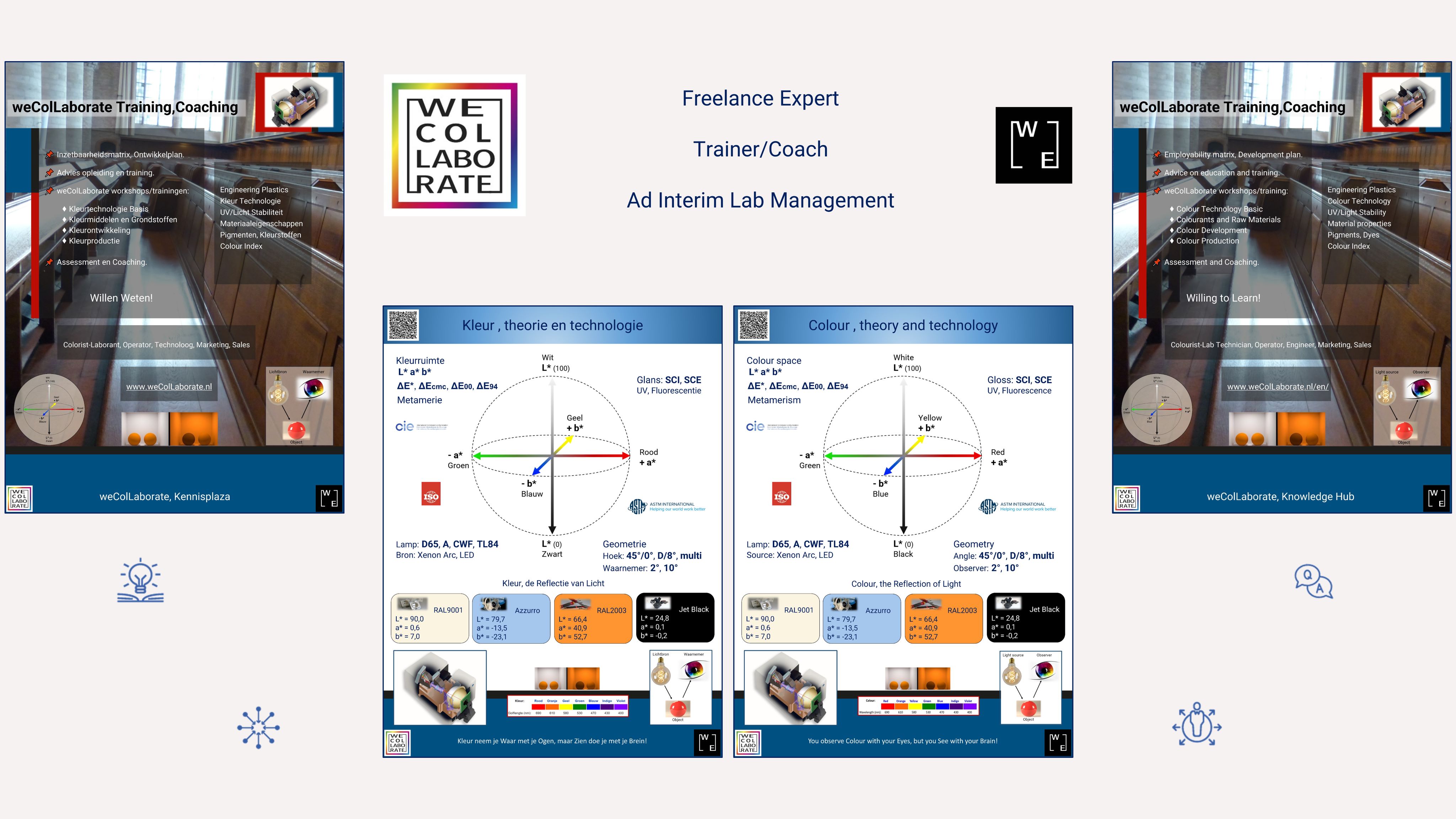
In my third blog, almost 4 years ago (!), I wrote that Colour is not “Rocket Science” and that although the knowledge can be learned, it does require real craftsmanship and experience. And I still think so!
With all the free Colour webinars and training courses that are offered nowadays, you will soon be passed over as a non-free Trainer/Coach among the general public... because why would you pay for something that is offered for free?
Well, I understand the suppliers, if you sell Colour spectrophotometers it makes sense to explain their parameters and thus attract potential buyers for your devices.
But Colour is a property and not to be confused with Colour Technology, which involves more than just the parameters of CIELab.
Because when you talk about architecture, Colour styling, home furnishings or marketing, in addition to Colour as a property, you are also talking about the psychology and harmony of Colour; just take a look at the non-free, but in-depth and broad, training as a Colour Expert or Colour Designer from the “Nederlandse Kleurenschool“ (Dutch Colour School-Mark Kotterink).
And when you talk about my field of expertise, the Colouring of Engineering Materials, then in addition to Colour as a property to be analysed, you are also talking about Colour recipes, compounding and injection Moulding.
And that brings me to an essential aspect of Colour, namely “context”.
Explaining Colour in itself is important, but it is equally important to explain what you can do with it.
What does it mean that you know what Colour is, how it is created, what is needed to correctly see and communicate Colour, what Colour standardisation is, how our eyes work and what the brain does with it, where is perfection and imperfection, what is the Colour relationship between visual and measurement?
Is CIELab knowledge enough?
What connections can you make in practice? What about Colour in the plastics production? Which deviations can you explain using L*a*b*? What about Measurement System Analysis of Colour in practice, which variation is acceptable, which variation is even relevant?
If you have to adjust the process, which raw materials do you use and what effect does this have on the other properties of the plastic? What influence does temperature, moisture and oxygen have on the Colour of the plastic and how do you translate the Colour into causes and effects?
Which pigments and dyes do you use to make a Colour recipe that deliver cost-effective and Colour-stable productions and products? Or do you opt for masterbatches, but how do you shape the Colour recipe?
And how do you translate the customer's wishes (and requirements) into a Colour recipe and specifications that are of high quality and feasible in the production of plastics?
Colour technology is much broader than just Colour and truly a profession in itself! It requires insight, knowledge and experience, in all raw materials and the relationship with material properties, the compounding process and the processing of the plastic granulate. And I haven't even mentioned the current and future challenges in the field of sustainability and the role that Colour Technology plays in this.
Every company that makes or processes plastics should have a Colour Technologist or specialist who is the pivotal figure in a variety of disciplines: from Sales/Marketing to logistics to Product/Process Technologists to R&D.
The training for Colour Technologist of Engineering Materials does not (yet) exist in the Netherlands, as there is, for example, education (even University) for Process Technologist. My ideal would be that Colour Technology becomes a specialisation within the Process Technology education or that at least Colour Technology becomes a fully-fledged part of the curriculum and not, as is often the case, when Colour is a footnote in the long list of material properties of plastics and lacquer.
It will take some time before that ideal is achieved, so process-technical Netherlands will have to make do with additional good training from experienced experts, such as weColLaborate.
Do it well and completely, by all means participate in the Colour webinars from the manufacturers of spectrophotometers, but be sure to participate in training for Colour Technology, Colour in Theory and Practice:
Ask the experienced Expert!
Feel free to contact us or request a quotation