


European Union
I don't know if you missed it (or if you have a different opinion 😊), but my confidence in the European Union got a huge boost this month.
Amidst all the geopolitical turmoil and muscle-flexing from the leaders of various regions and countries, the EU decided not to release the frozen Russian assets and subsequently borrowed €90 billion to support Ukraine.
The EU has received considerable public dressing-down in the past year. It's accused of being an old vehicle, outdated, slow, cumbersome, undecisive, and too quiet. It's accused of suppressing "free speech" too much through excessive regulation. It's accused of doing too little to counter the import of cheap (state aid) materials, causing several recycling companies in the Netherlands alone to go bankrupt. It's being flooded with good but cheap electric cars from China, causing Volkswagen, among others, to find itself in dire straits. It's accused of being held hostage too often by countries like Hungary, sometimes Slovakia, and to a lesser extent other Eastern EU countries when it comes to Ukraine. It's accused of being far too dependent, military-raw materials-IT (to name just a few), on China and the US.
Let me start by saying that there's some truth to the above, but that's not the whole story.
The European Union was founded with the "Maastricht Treaty" and came into effect in 1993. Before that, there was only a purely economic cooperation between a few countries, through the combination of the “European Coal and Steel Community” of 1951 and the “European Economic Community”, formed in 1958 by six countries (Belgium, the Federal Republic of Germany, France, Italy, Luxembourg, and the Netherlands). At just over 30 years old, you could even call the EU young. In the years following its founding, the EU grew, a single currency was introduced, and in the last elections, more than 375 million EU citizens were eligible to vote (!).
Europe has always been fundamentally a region focused on other regions, which, besides economic advantages, also brought dark times such as colonisation and slavery, focussing on trade and economics. It’s natural preference for diplomacy instead of weapons and harsh language aligns seamlessly with this. It is not easy to transform that culture into a more moral leadership and the associated communication. It is only since the corona pandemic and the war in Ukraine that the EU has realised, with increasing confidence, it has a leadership role to play in the world. This also involved the process, typical of a young union, from nationalism and national sovereignty to a more centrally organised EU regional government. And sometimes it failed and learning to do better next time.
After World War II, Europe was in ruins, and thanks to American investments, it slowly but surely recovered. However, an increasingly economically strong Europe became increasingly dependent on America (which profited from this with a huge ROI!). In recent decades, under American leadership, and Europe followed, a real exodus to China has took place. It's no wonder then that nowadays more than 80% of all raw materials come from China (and recently also from India). That China through all these investments and economic progress would eventually develop into a major player currently in trade and geopolitics is a logical consequence and should come as no surprise. Becoming less dependent on both China and America is not only a major challenge, but is now also in full swing: The enormous increase in knowledge, innovation, and production of weapons, ammunition, drones, etc. - In 2028 and 2030, mines will open for various inorganic raw materials (organic chemistry is lagging behind somewhat) - There are European variants for all IT applications, and it is only a matter of implementation - In technology and education, we are still at the forefront (along with other regions).
But to truly become independent, another five years are needed, again by making mistakes and learning… although, if absolutely necessary (!), it can also be achieved within two years.
A prerequisite for the latter is that internal bickering decreases and conservatism (and populism) diminishes somewhat (and certainly not increases).
By the way, the fact that Volkswagen and Stellantis are in dire straits, and now require support from the EU (!), is only partly due to competition from China, but also to poor management policies and a lack of innovation and product development... It's no wonder that Ford is now partnering with Renault (which is performing much better) to develop and sell "cheaper", high-quality, and compact electric cars.
In 1993, the formation of the European Union was more than just an economic cooperation; it also focused on the rich diversity of cultures and how working together could protect and strengthen individual countries and citizens in all areas.
Nowhere in the world are the rules and laws for privacy, disinformation, unfair competition in for example IT and social media so strict (and the recent election in Romania demonstrates the urgent need for this). REACH (the EU equivalent of the benchmark American FDA) has rules on safety, health, and the environment that go beyond those of the FDA or other variants worldwide (just look at the discussion and upcoming legislation on PFAS).
The slow pace is sometimes frustrating (especially when it affects you), but not surprising with the 27 participating EU countries.
The fact that, despite all the rhetoric to do so from Germany, a large number of other EU countries, and even the EU Commission President herself, the valid counterarguments from a small country like Belgium have been taken seriously, the EU has decided, morally and commercially right (in my opinion), not to release the funds for a loan to Ukraine, and, instead, the EU has decided to jointly enter into a historically very large loan, strengthens my conviction in a functioning EU and will only, in my opinion, impower it much more.
If the EU continues to follow its own course as much as possible, continues to embrace its diversity, and utilises all talents and capabilities, then it is and will remain a region of great importance in the world.
My wish for 2026, in addition to all the best wishes to everyone, is that the United Kingdom rejoins the EU.
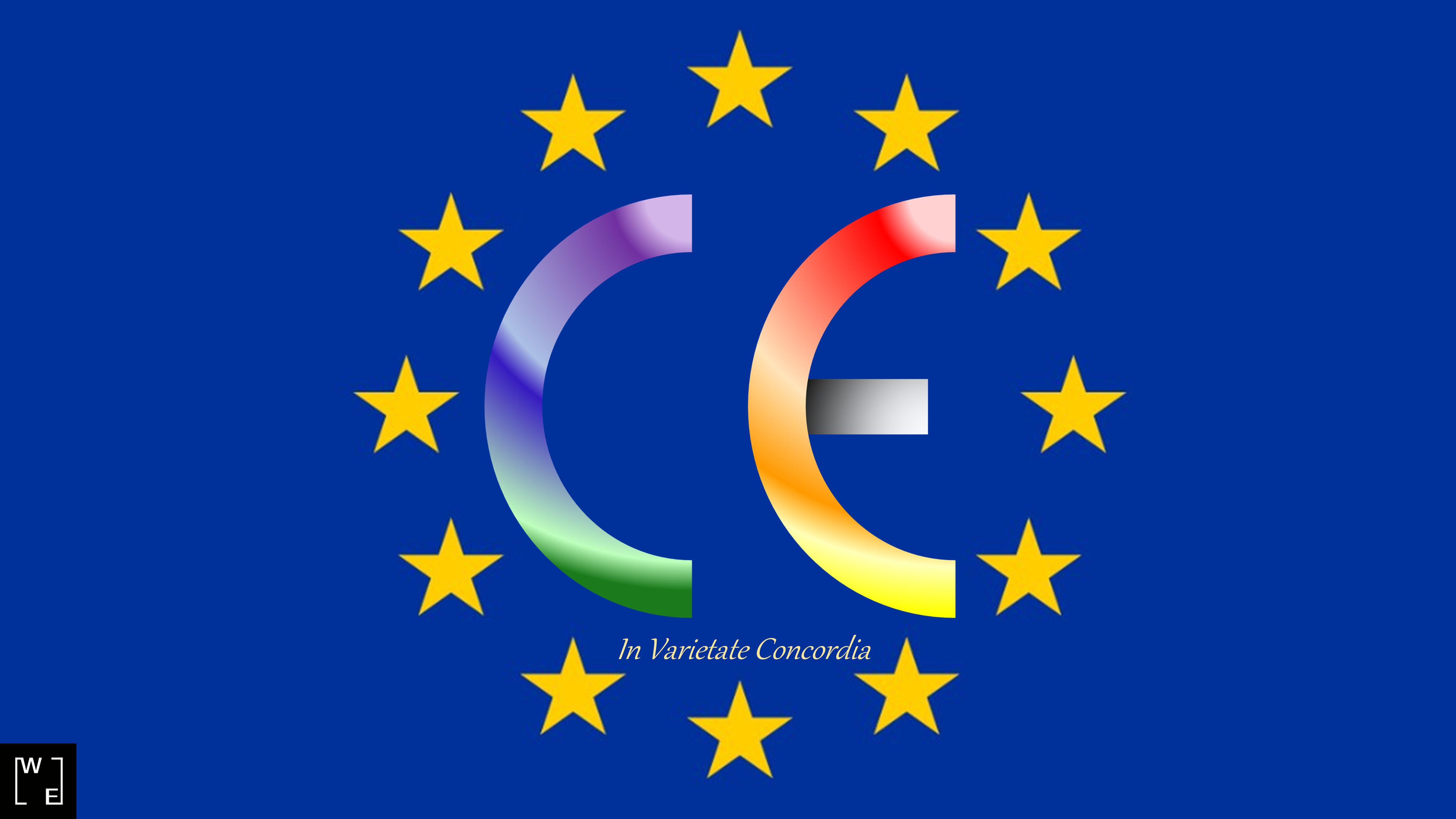
The EU is not a united states of Europe, but the union of cooperating countries in the same region… its shared motto is not for nothing:
In Varietate Concordia!
-
United In Diversity!
Feel free to contact us or request a quotation