


Sustainable Engineering Plastics
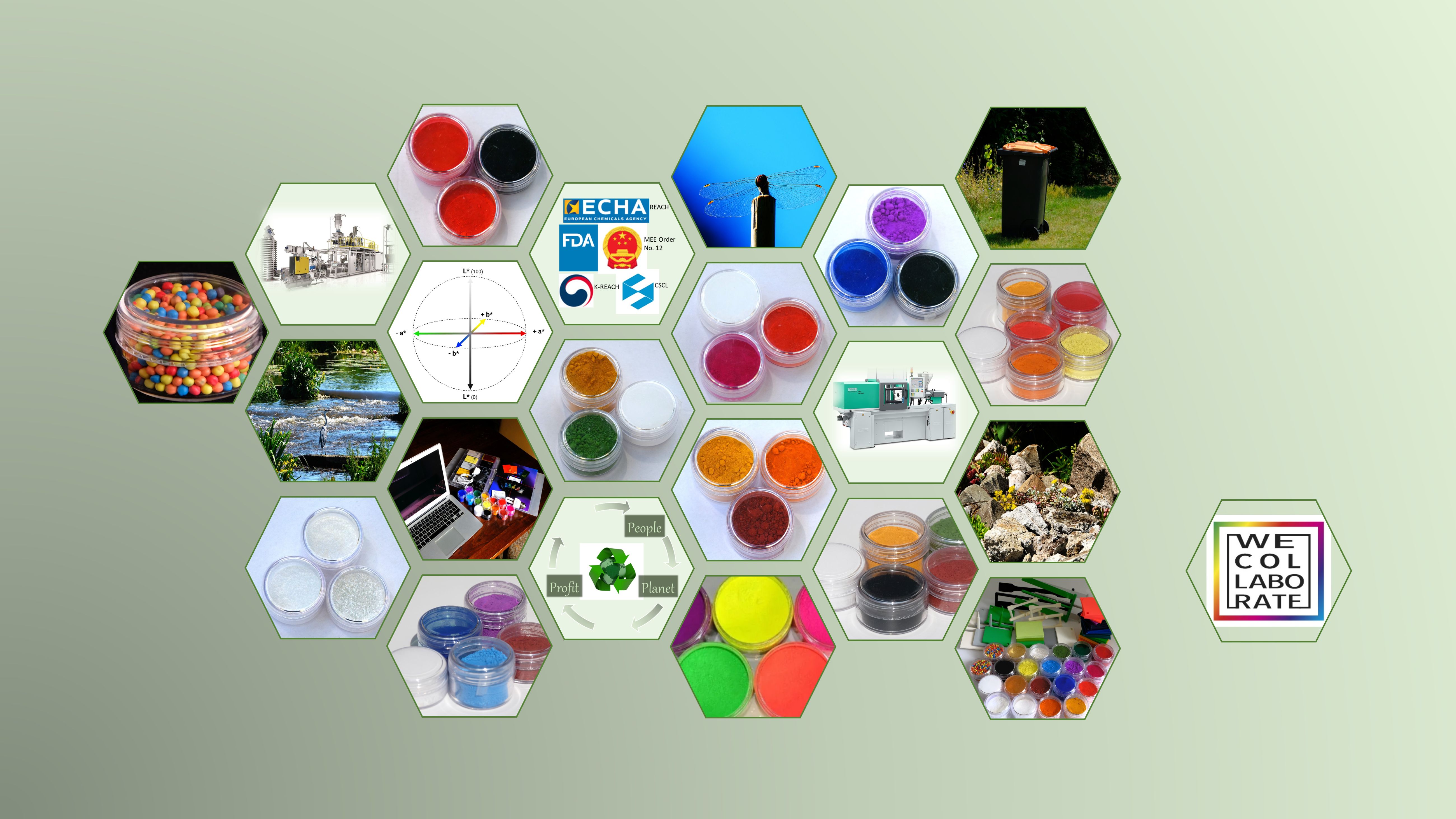
If you keep up with the news, you could think that plastics sustainability is mostly concerned with "single-use" plastics - bags and straws, PFAS - domestic (hobby) eggs and community gardens, and various forms of energy- solar panels, wind turbines and nuclear power. Also dominating the news is the geopolitically driven combination of, on the one hand, the "dumping" of cheaper Chinese materials, leading to (or threatening to lead to) the bankruptcy of numerous recycling companies in the Netherlands, and, on the other hand, the decreased supply of raw materials (and chips) from China, which are essential for achieving the EU's sustainability goals.
This narrowing down by the media and the politicisation of the term is such that you almost forget what it is actually about: reducing the (global) use of natural resources (through, among other things, reuse and decreasing consumption), increasing product and production safety, and improving the well-being of citizens (both in the Netherlands and in producing countries outside the Netherlands) and, in a broader sense, preserving our beautiful planet.
And that it is necessary is evident if you watch the occasional research and information that appearing in the news: the water quality of the rivers, soil pollution, fine particles (air) pollution, pesticides on/in vegetation, CO2 and nitrogen emissions, the decline in rainforests/woods, pollution of our most important oxygen suppliers, the seas, and the gigantic mountains of plastic waste.
It's not easy to transform decades of (almost) unbridled consumption into planet-conscious consumption... it's like a heavy oil tanker forced to change course. Look at the last environmental summit in Brazil, where finding consensus on the course and what it will take is incredibly difficult. All sorts of geopolitical national interests play a role, as does the sentiment that much of the "misery" was caused by the historically wealthy Western countries, and that the historically poorer countries suffered as a result and should now contribute disproportionately (especially financially) to solving the problems... in my opinion, some countries have a point. But also look at the popularity of discount websites like Shein or Temu or Bol.com or Amazon... Black Friday has now become Black November in the Netherlands.
But, considerable action is being taken, however slowly, within Europe and sustainability has become an integral part of government policies and corporate strategies (no matter how much some presidents of some countries want to stop it): think of electrification, think of increasing legislation and regulations, think of increasing alternative materials and production processes, think of reducing water and CO2 emissions from existing processes, think of hydrogen, think of bioplastics, think of recycling (both mechanical and chemical)... Call me an optimist, but I still believe that if the tide is raised enough (or if there's good profit to be made from it), humanity will be able to find better solutions. I expect that sustainability has now reached the point of no return and offers so many opportunities for industry that even in countries where "drill, baby, drill" is the leading expression, significant progress is being made to contribute to a more sustainable world. This has, however, also resulted in it becoming a geopolitical issue, but that's beside my point for now.
There are all sorts of developments in polymers, plastics, processes, and reuse, but there's still very little discussion about the colour component. And as a Colour Expert, I find that odd, because pigments and/or dyes are added to the majority of visible applications.
Besides the most commonly produced natural Engineering Plastics (so no colourants), standard black comes in second, followed by various shades of grey (RAL7035 is the top colour), and then a remainder of applications in all sorts of colours (purple, blue, green, yellow, orange and red).
And this poses a major problem, for example, with mechanical recycling. Just look at standard black, coloured with carbon black, which, with current NIR technology, absorbs so much light that it's no longer possible to distinguish between the different polymers. And yes, there is an alternative pigment or combination of dyes that makes NIR recycling possible, but compared to carbon black, they are so expensive that it's barely profitable. There is a better way!
And what can you do with all those coloured materials that can be separated? Currently, they're mixed, a little carbon black is added, and can subsequently only be used for applications that do not require superiour properties, because we don't have an answer to the decreasing material properties yet ("downcycling" versus "recycling" versus "upcycling"). There is a better way!
Increasingly, there's a focus on recovering raw materials from existing applications, such as smartphones (the "old-for-new" Dutch rule), where rare earth metals and lithium (to name just a few) are made reusable.
But what about the colourants?
Consider all the whites and light greys, where the main colour component (often a few percent) is TiO2 or ZnS, and where prices have been rising dramatically for years, partly due to availability.
Consider those pigments that require antimony, which must primarily be sourced from China, where that same antimony also needs to be used to harden and preserve (reduce wear) metal. The pigment industry is really busy developing alternatives for antimony, but that means for certain a subtle difference and subsequent adjustments to colour recipes… and that costs time and money, not only in pigment development but also in adapting the colour recipes for plastics.
And I'm not even mentioning the developments related to PFAS or other environmentally and humanly hazardous substances, which also receives (and rightfully so) a lot of attention. But the groups of organic pigments and dyes, which (partially) dissolve in the polymer matrix and play a role in every recycling route (chemical and mechanical), are not even discussed. There is a better way!
So, there is some activity in the field of colour, but it often is (still) incidental and not a structural part of the sustainability strategy.
It would be good if a Colour Expert were involved in every relevant discussion about sustainability, explaining this important aspect and suggesting possible solutions.
Of course, weColLaborate is available 😊
Feel free to contact us or request a quotation