

the Art of Flip Thinking!
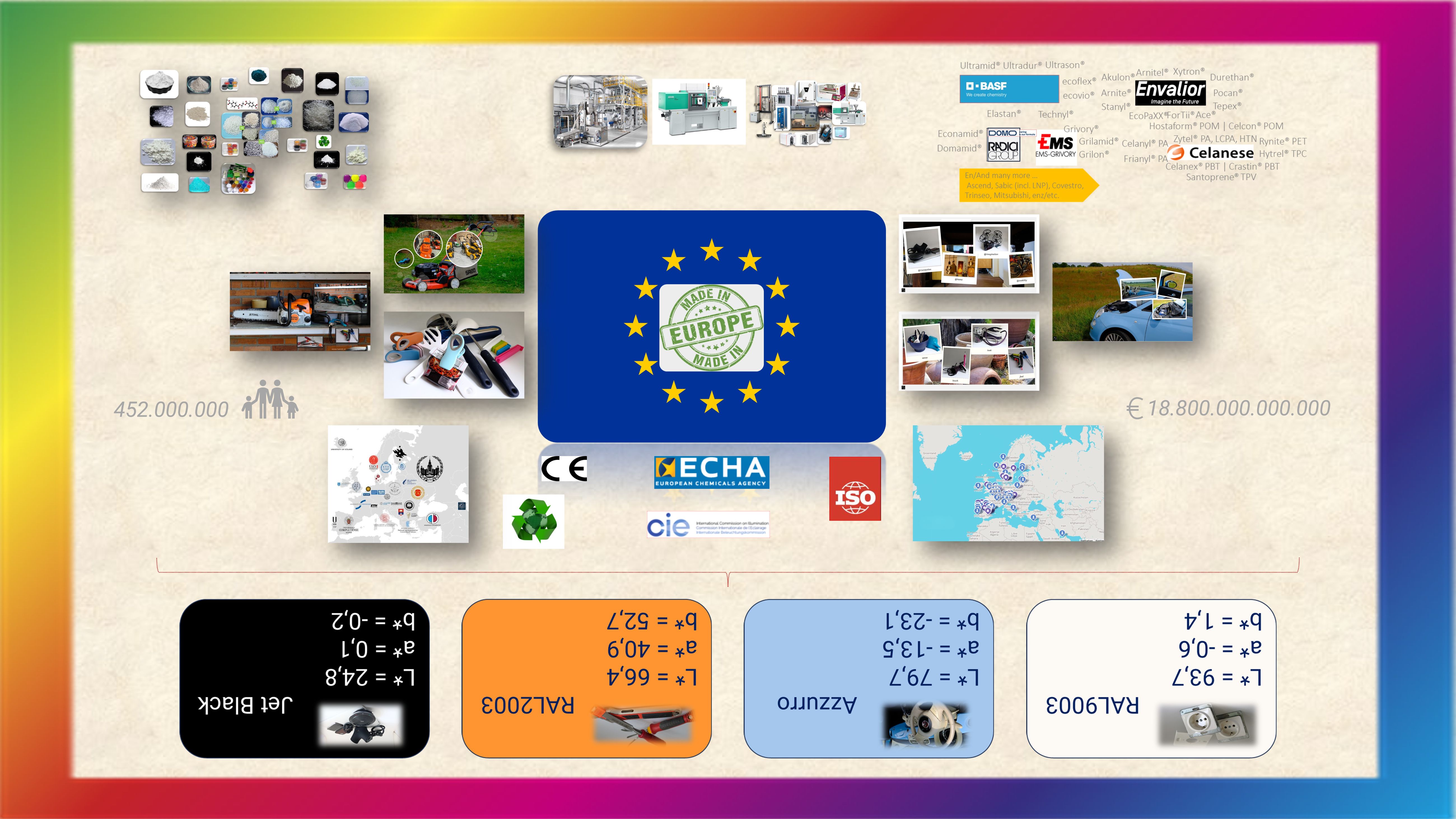
Although geographically one of the smaller regions, Europe’s impact across the world is enormous!
Consider: Culturally, through food – fashion – music – art – philosophy – science, its influence is felt everywhere... the first democracy started in Greece (as did so many other things by the way). Geopolitically, while other regions often rely on raw materials or military might (frequently successful) the so called "Brussels effect", through its standards, privacy legislation, and climate goals, sets a normative mechanism in motion…Combined with its status as an economic powerhouse, it often proves highly effective! Look at the fields of IT and AI where, although we sometimes complain that Europe does not have an answer, non-European companies frequently adapt their development processes to ensure their products can enter the European market. This is because the European Union (EU) constitutes one of the world’s largest trading blocs and economy, characterised by a very high standard of living and a robust internal market. Then there is a fourth compelling pillar: Europe’s capacity for innovation and sustainability. With our exceptional universities, research centres, startups, small and medium-sized enterprises (SMEs), and large corporations (please do increase that R&D budget for once), many European countries have proven to be world-class in green energy, advanced technology, healthcare (even if currently under pressure), and education.
The fact that Europe could become so significant - I’ll leave the full picture to the historians - sometimes due to good advancements and at other times in spite of some very dark periods in its history, may well be because of its age and the long-term development that such a history entails. That is why I sometimes, although I am not blind to Europe’s shortcomings, fail to understand the negativity coming from America, because if there is one country in the world, with all its (originally) European (!) migrants, who is connected to everything that defines Europe, it surely is that very important superpower.
Today, Europe is once again (or still) facing major challenges. China, and potentially India as well, is knocking firmly at the door. China has evolved into a global industrial, economic, and geopolitical powerhouse, but one characterised by a, for Europe, significantly different culture and political system. This relationship was very profitable for decades, with many European companies going to China and taking with them (a wealth of) knowledge and production capacity (and away from Europe). The flip side, however, is that as China’s self-confidence has grown, the trade balance has become skewed, leaving European companies struggling to remain competitive. Furthermore, our own normative mechanisms, and the fact that we may have just let things slip (?), has brought about consequences for Europe itself (the other side of the coin).
But instead of complaining or giving up, just do what you’re good at:
”turn a disadvantage into an advantage” or "if not stronger, be smarter” or… simply Flip Thinking!
Just let the rest of the world do what they must to survive, and even admire that, but follow your own path and use your strength… find the “gems” like ASML across the whole (!) of Europe, and apply “our” entrepreneurial spirit, innovation, knowledge and expertise for example in the fields of energy and sustainability….
What can we do with those cheap Chinese virgin materials? Certainly not recycle them to produce the same thing, because that will never be competitive!
Just keep on producing the cheap goods with it that you need anyway or could they perhaps apply them via drop-in chemistry processes to produce cheaper high performance alternatives instead of new fossil-fuel-based versions?
What can we do with the decades production, of now, plastic waste? While mechanical recycling offers some relief and provides a second chance for materials, it appears to hit a global plateau of maximum 10% reuse. Can we not develop a series of chemistry and industrial facilities that incinerates, safely and without nuisance to the surrounding area, all this waste, resulting in: heating and electricity to nearby villages and businesses, water for cooling factories and equipment (and after purification even drinking water?), capture CO2 for use in various other products (such as supercritical CO2 applications or new polymers), recover metals for reuse, and repurpose the remaining residue as filler material for plastics and asphalt?
Could Europe, in addition to being cleaner of oceans (read: The Ocean Cleanup; another gem!), also become the world’s cleaner of land?
What else can we do to address high energy prices and our dependence on other major countries? We are already on the right path, but this could be more European…what does it matter if every country generates solar energy for themselves or (smarter) is generated in those large plains in Spain for all? …where in Europe does the wind blow strong and “always” for the most effective wind energy generation? …Can we optimise Europe’s existing hydropower capacity (currently to its max)? …Could nuclear energy be used more efficiently across the whole of Europe (so, with EU budget)?
I can imagine maintaining a sort of "emergency energy reserve" (wind/solar) in every country (just in case), but for the bulk of our energy needs, collaboration is needed and subsequently production in the most logical locations (make some concessions to each other!). But don’t forget to minimise the impact of these facilities on local communities and the environment (or at least satisfactorily compensated).
If I may offer one point of criticism, it is for both Industry and the general Public! If Europe works together effectively, pool its strengths and applies it, facilitates a favourable business environment (which does already exists!), companies and citizens must also take responsibility.
So, BASF, Envalior, Radici/Domo, Epsan, Avient, Rowa, Milliken, and the many compounders and injection moulders in my field of coloured plastics and the vast number of firms across other chemical and technical sectors: invest in and centre on Europe!
So, to the public: stop overconsuming and purchasing cheap, disposable goods, return (standard in 1970s Europe) to choosing quality over quantity, keep in mind that you are not only (directly) depleting the Earth’s resources but also (indirectly) diminishing prosperity within Europe!
Faced with an “America First” policy and mass exports from China, Europe must find an appropriate response. My view is that we should not be naive, but certainly also avoid falling into a protectionist reflex. We must do what we have always been good at, what has been and remains our core strength: creating a shared added value.
Whatever the rest of the world does, let Europe continues to stand for collaboration, inclusion, innovation and creating and providing opportunities:
Europe, open to the world! ...but this time though: invented and “made in Europe.”
Feel free to contact us or request a quotation